

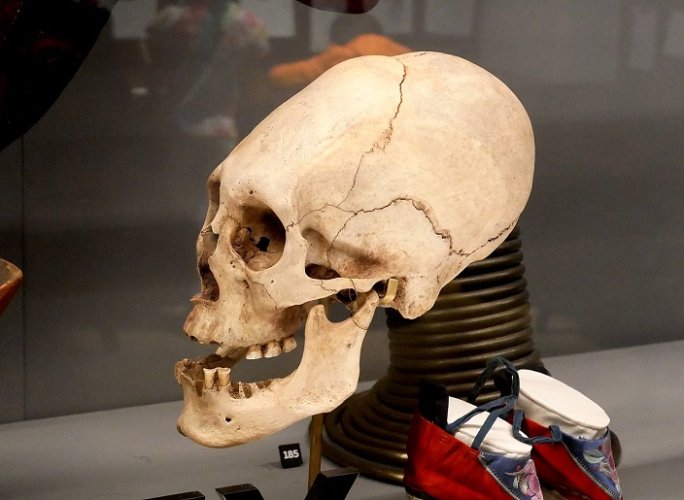
The ancient city of Tiwanaku, located on the border of modern Bolivia, Peru and Chile, hides the mysteries of the pre-Columbian era. Recent research has shed light on a unique and surprising practice that helped ancient warriors distinguish between friend and foe on the battlefield.
Researchers claim that pre-Columbian warriors used various techniques to change the shape of their skulls. These changes in appearance not only conveyed social identity, but also class and occupation, essentially creating a sort of wearable "uniform" that could not be removed.
According to the study's authors, this was especially useful for warriors, who could distinguish their fellow combatants from their enemies based on differences in the structure of their skulls.
The ancient city of Tiwanaku, with a population of about 40,000, flourished from 500 to 1150 AD. This city became a major political force in the pre-Inca era and was one of the most powerful states in the south-central Andes.
Tiwanaku, like other pre-Hispanic cultures, was associated with ritual alteration of skulls. The researchers reviewed the literature on the history of artificial cranial deformation (ACD) in the Andes, which allowed them to identify several methods for the practice.
Table Oblique Method: In this method, two wooden boards were placed across the frontal and occipital areas of the infants' heads and secured with bandages, which gave the skull a more flattened shape.
Vertical piece of wood method: In this case, infants were placed on their backs on a flat wooden surface and a vertical piece of wood was attached to the frontal part of the skull, which also deformed the skull.
Conical Skull: Babies' skulls were tied with ribbons, belts and bandages, creating a conical head shape.
The purpose of this practice was not only to determine a person's class and profession, but also to make it easier for warriors to distinguish between their comrades and their enemies. However, such effects on the skull could also have cognitive effects. Damage to different parts of the brain could affect memory, alertness and executive functions. As the researchers note, at that time physically resilient people were more in demand than intellectually developed people, and therefore possible cognitive impairment could be compensated for by physical skills.
The study, published in the journal Child's Nervous System, leaves us with many mysteries about the ancient techniques and their consequences. It is possible that the Tiwanakuans sacrificed their physical and cognitive integrity to emphasize their social identity and their status in society.