

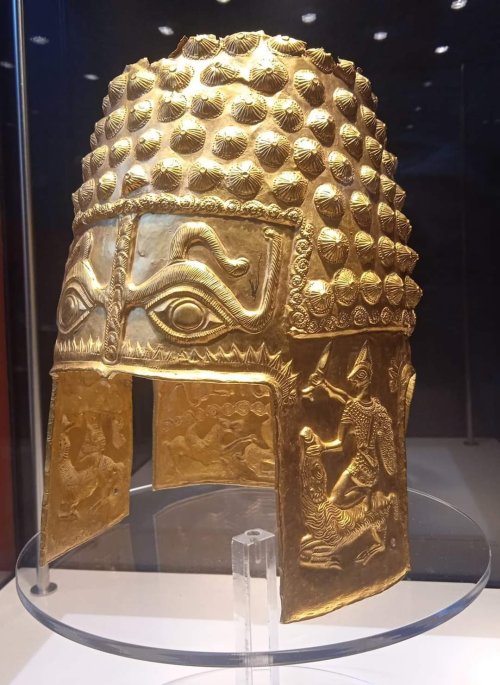
 Golden Helmet/Headdress of Coțofenești, the Geto-Dacian ceremonial Crown and Romania's most famous ancient gold discovery, is approximately 2000 years old. Located in Prahova County, Romania, the piece weighs 726.08g, 76 percent gold, and is 25.50cm. high, with a diameter of 20.00cm.
The headdress showcases winged animals like griffins and ritual offerings to the Geto-Dacian God Zamolxis. Also, the Crown displays Mithraic rituals with various symbolic representations. Further, the Mithras represented magical practices and an initiatory system of Mithraism that dates back to Ancient Geto-Dacian and Thracian worship.
Ultimately, Apollo and Helios's origins are Hyperborean, Geto-Dacian and Thracian, so it's conceivable the crowns from the Danube Gorge that depicted two eyes were worn by Getae kings who worshipped Apollo and Helios.
Finally, the Ancient Kings or Royal family wore the crowns into war as a patriotic flag, modelled during parades to show signs of power and unification when the king sat on his throne. Therefore, this Geto-Dacian Crown was used for the same, via holidays, ceremonial, religious, and war parades. So, the gold crown represents coalition and high status; the silver represents the most prosperous and fertile regions.
Boldy, Geto Dacian treasure is unique, symbolizing intellectual, spiritual, or philosophical value to those who owned or crafted it. Also, they contributed to most of Ancient Europe's gold collections because the Geto-Dacians had the largest gold-producing facility at Sarmizegetusa Regia. As a result, when we observe Ancient European gold treasures from other civilizations, we will see similarities that stem from the Geto-Dacian and Thracian influence.
 Credits to original owner