

Lore Lindu, a vast forested area on the Indonesian island of Sulawesi, hides many secrets.
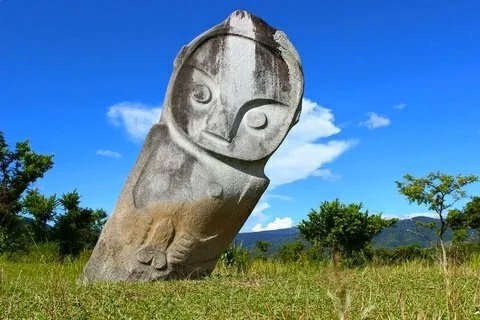
In these places there are birds that laugh like people, and primates only 20 cm tall. There are also ancient granite sculptures, the origin of which still remains a mystery. No one knows who carved them, when and for what purpose.
Today, Lore Lindu is a national park. It was founded in 1982 and its area is 2180 km². For a long time, the existence and location of stone structures was not formally registered. Only in 2001, an expedition of the American Geographical Society helped Indonesians discover and register architectural creations of antiquity.
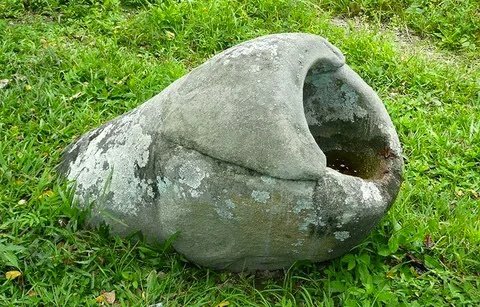
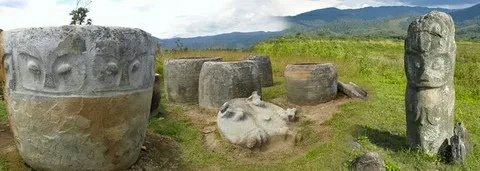
So far, more than 400 sculptures ranging in height from 10 cm to 4.5 m have been found in the park and in the immediate vicinity. Among them, approximately 30 have the outline of a human figure. Some are toppled into the river, their massive faces and unblinking eyes covered in wind-blown dirt and leaves. Others stand forgotten in rice fields, hidden by tall grasses.
Megaliths range in size from a few centimeters to 4.5 meters. Various archaeological studies date these finds to between 3000 BC and 1300 AD.
The original purpose of creating the idols still remains a mystery. They may be associated with a culture that existed 2,000 years ago in Laos, Cambodia and the islands of Indonesia, but no tools or other traces of the society that built them have been found. “We cannot explain,” says American archaeologist Edward Pollard, “why these statues were carved, because we cannot find any other analogues for them on our planet. We cannot determine which culture these stone sculptures belong to. At least they were created a very long time ago, long before the first chronicles appeared.”