

German paleontologists from the University of Bonn analyzed huge fossilized bones found in various regions of Europe dating back to the 19th century. They came to the conclusion that in front of them were fragments of the skeletons of giant ichthyosaurs, reaching 25-30 meters. This corresponds to the size of the blue whale, the largest animal on Earth. The study was published in the scientific journal PeerJ.
Ichthyosaurs arose in ancient oceans in the Early Triassic, about 250 million years ago. The largest creatures appeared only about 215 million years ago. Almost all species of ichthyosaurs went extinct at the end of the Triassic period more than 200 million years ago.
The huge bones have caused controversy in the scientific community for many decades. Some scientists claimed that they belonged to ichthyosaurs, others believed that these were the remains of long-necked sauropod dinosaurs, stegosaurs, or some completely new ancient reptiles.
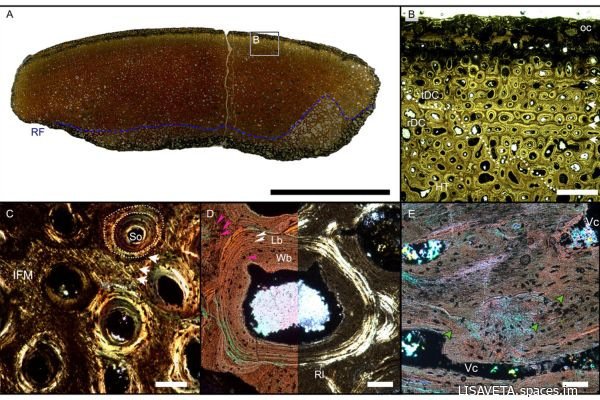
The latest findings from researchers at the University of Bonn are based on bone tissue analysis. Their unusual microstructure is very similar to the bones of common ichthyosaurs found in France, Germany and England.
The walls of the samples contained long strands of fossilized collagen, making them look like carbon fiber reinforced materials. Such bones could grow very quickly without losing stability.
The scientists noted that their findings almost certainly rule out the possibility that the giant bones could have belonged to land-based dinosaur species.