

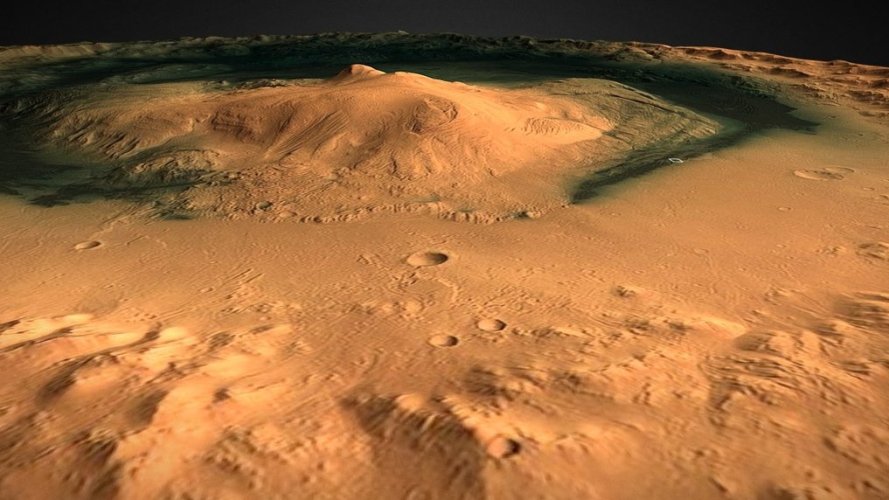
NASA's Curiosity rover detected methane emissions on the surface of Gale Crater. This gas, commonly associated with life on Earth, has scientists wondering about the possibility of microbes living on the Red Planet.
However, further studies using the SAM (Sample Analysis on Mars) instrument revealed unexpected behavior of methane. Its concentration fluctuates seasonally, peaking at night and disappearing during the day. Additionally, the ExoMars Trace Gas Orbiter did not detect methane in the Martian atmosphere.
Researchers suggest that the source of methane may be geological processes occurring deep underground, where water interacts with rocks. However, the mysterious behavior of the gas requires additional explanation.
A recent study published in the journal Planets suggests a new hypothesis. According to it, methane is sealed under solidified salt, which can form in Martian regolith. As the temperature rises, the salt softens, allowing methane to leak out.
Researchers also speculate that methane may be released in puffs when seals crack under pressure, such as those from the Curiosity rover. This hypothesis may explain why methane was only detected in Gale Crater, where the rover operates.
Further research is needed to confirm this hypothesis and better understand the processes of methane formation on Mars. Scientists hope future missions will help solve this mystery.