

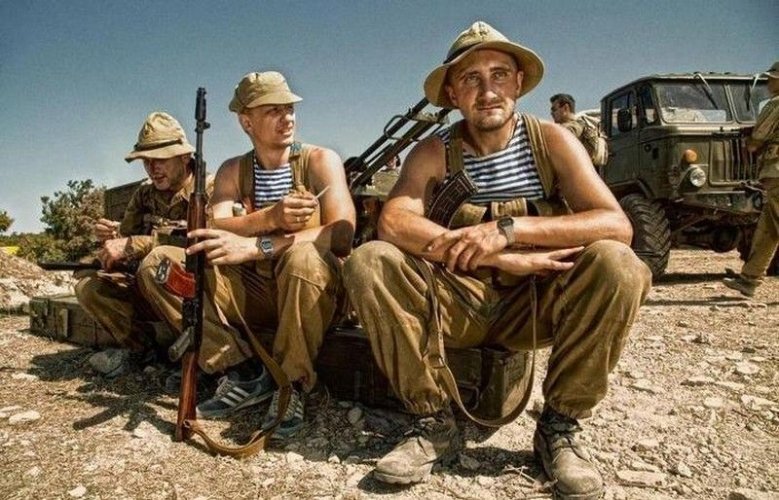
The Afghan war, according to some contemporaries and descendants, became “Vietnam for the USSR.” In any case, this is how the leadership of the United States of America positioned their attitude towards this war. Speaking about weapons in this conflict, we can say with all confidence that literally everything was used there with the exception of nuclear bombs, intercontinental ballistic missiles and the navy. However, we can highlight several truly iconic designs, in addition to the legendary Kalashnikov assault rifle.
1. ZU-23
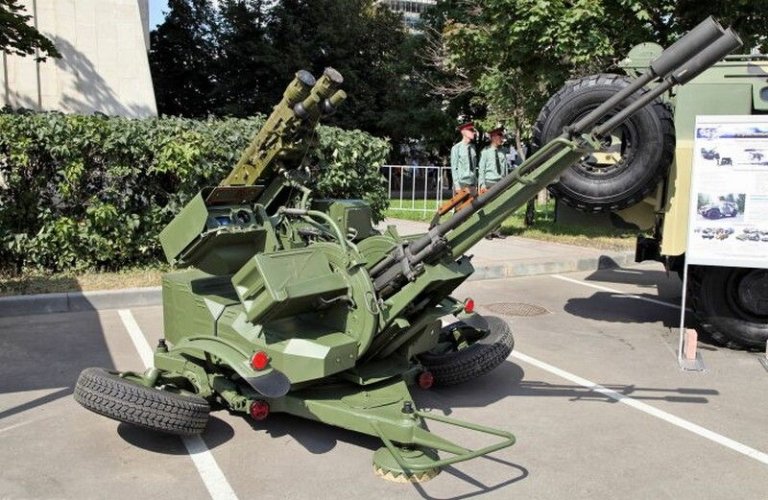
There were no targets in the Afghan sky for the ZU-23 twin anti-aircraft gun. But anti-aircraft guns were widely used to destroy ground targets. Fortunately, the specific landscape of the country of the mountaineers was conducive to this. Not only the “respectful” caliber of this gun was useful to Soviet soldiers, but also the ability of the installation to take large angles of inclination, as well as a fast attack sector.
2. SVD
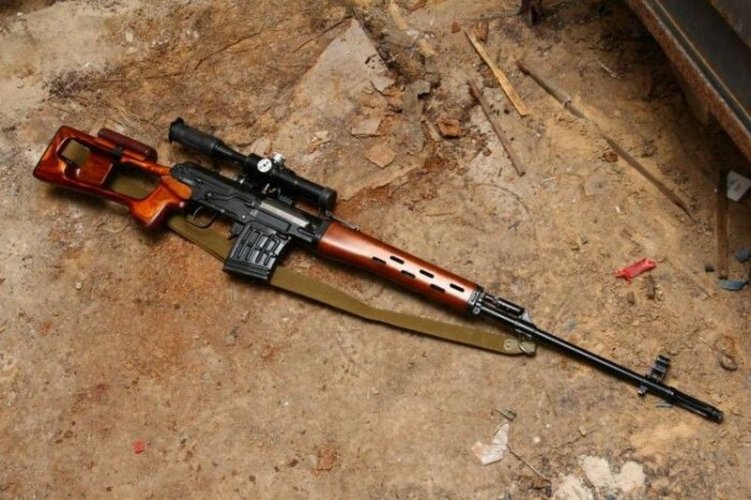
The Dragunov sniper rifle came in handy in the Afghan war. The workhorse of motorized riflemen, airborne troops and reconnaissance troops for eliminating important targets at a distance of up to 600 meters. However, in 1985, one of the first records for firing from an SVD was set in Afghanistan. Paratrooper of the 345th Guards Regiment Vladimir Ilyin hit the target at a distance of 1,350 meters.
3. NSV-12.7 "Cliff"
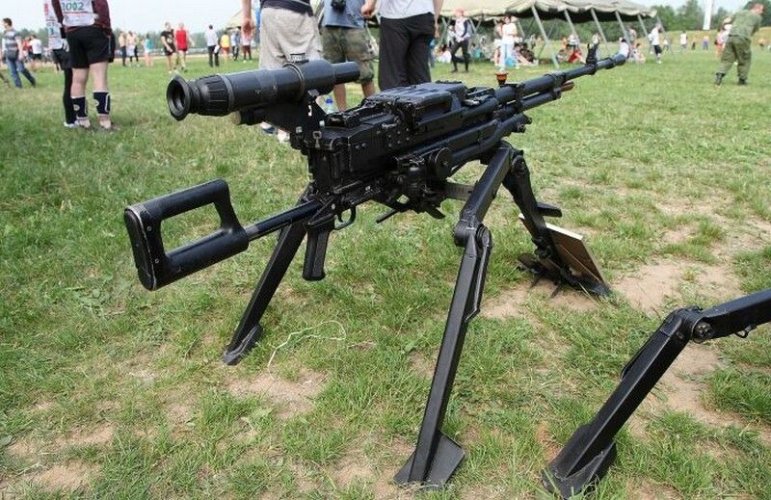
The Utes heavy machine guns, with a rate of fire of up to 800 rounds per minute, came in handy when organizing strong points in Afghanistan. The machine gun was good because it could be used to keep the Mujahideen at a distance that did not allow effective machine gun fire.
4. RPO-A "Shmel"
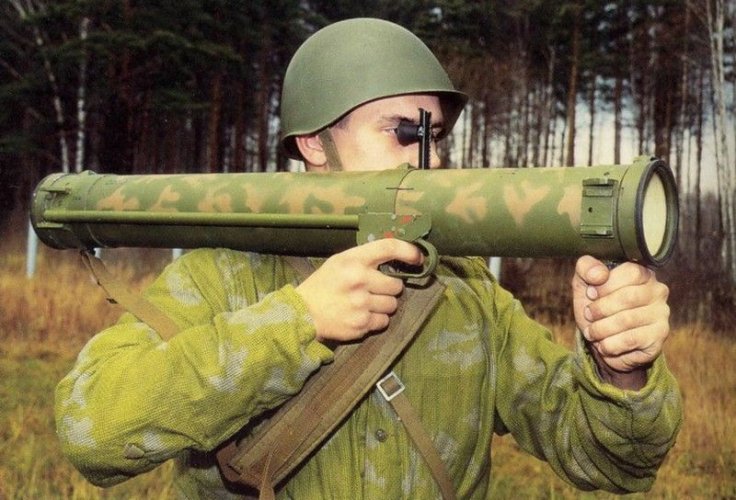
If you believe some memories, the Mujahideen nicknamed this hand-held flamethrower “Shaitan-pipe,” which can be translated as “devil’s pipe.” Effective fire from a flamethrower is carried out at a distance of up to 800 meters. When hit by a Bumblebee within a radius of 5 meters in an open area, it “utilizes” all living things. The flamethrower was especially terrible in the mountains, in narrow crevices.
5. Mi-24
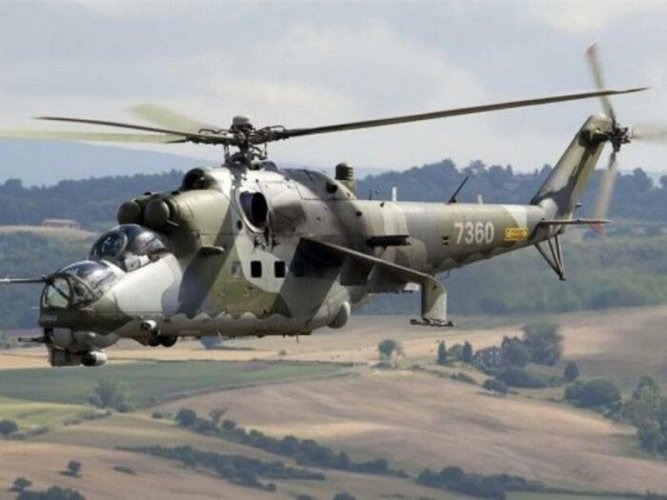
Apparently, it was in Afghanistan that the nickname “Crocodile” finally stuck for the Mi-24. Before the mujahideen had hand-held anti-aircraft missile systems, this helicopter was a real nightmare for the rebel Afghans. For the Soviet infantry and landing forces, the Crocodiles became real guardian angels. For example, in 1983, Anatoly Volkov covered the withdrawal of an airborne company in the Takhtar province without firing a single shot, simply imitating an attack on the Mujahideen over and over again. Soviet helicopter pilots were one of the few categories of military personnel who, if captured by the Afghans, actually had no chance of survival.
6. BMP-2
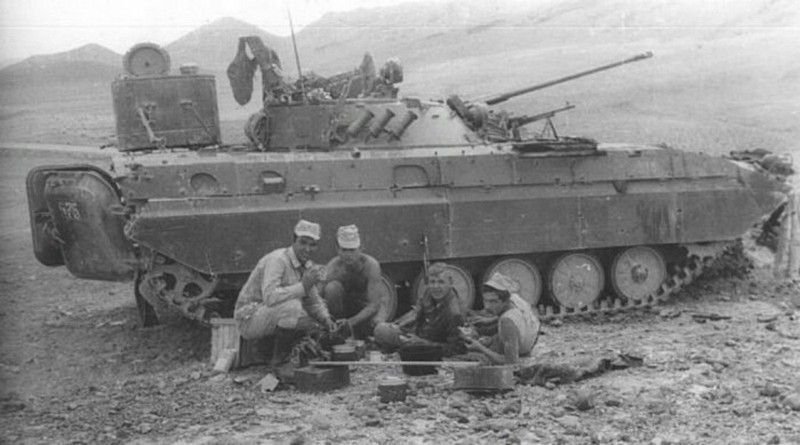
The armored vehicle was ironically nicknamed "Mass Grave of Infantry" by military personnel during the war in Afghanistan, after the sad experience of ambushes on roads and in gorges. In this regard, in most cases, soldiers rode armor. To this day, in the armed forces of the former Soviet republics, officers cynically joke that motorized riflemen in the event of war will have to choose between what makes them (sorry) less afraid: bullets on the armor or grenade launcher shots behind the armor.
7. Su-17
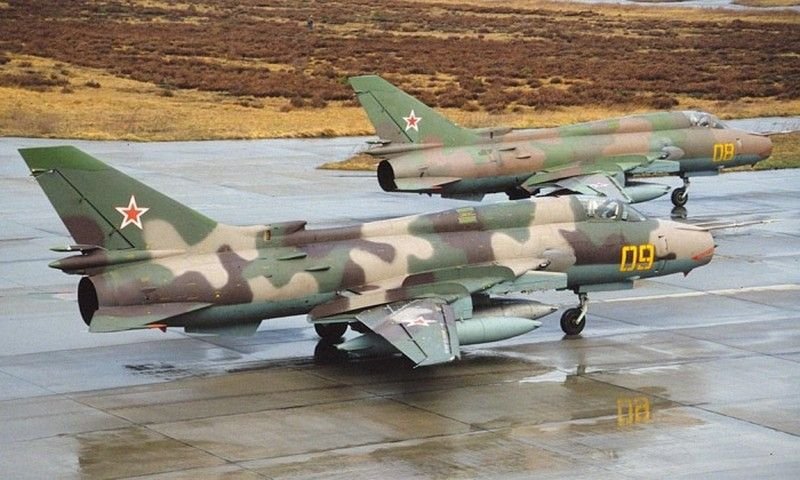
The only aircraft of the Soviet Union that fought the entire Afghan war from beginning to end. "Seventeenth" became one of the symbols of this conflict. The vehicle was used not only for combat missions, but also for reconnaissance missions. In Afghan conditions, operating the aircraft was extremely difficult. The difficult climate had its effect. In this regard, they tried to carry out Su-17 flights either in the morning or in the evening.