

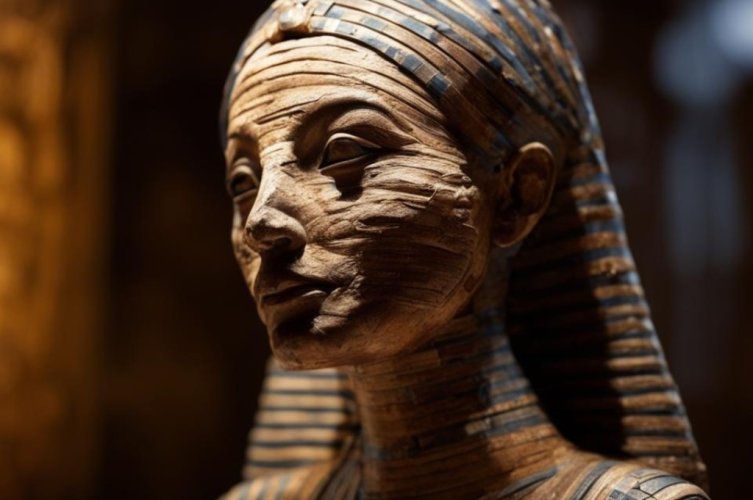
In Egypt, researchers conducted a detailed analysis of the mummified remains of a young girl whose life was cut short at the moment of childbirth. What they discovered shows how dangerous pregnancy and childbirth could be in those ancient times.
The study, published in the International Journal of Osteoarchaeology, presents details of the analysis of the mummy, originally excavated in 1908 at the El Bagawat cemetery in the Kharga oasis. Initial findings suggested that the young girl died during childbirth, but new analytical techniques are shedding light on the dark secrets of her fate.
A computed tomography (CT) scan of the mummy's body has revealed startling facts. It turned out that the young mother was in the process of giving birth to twins, but unfortunate circumstances led to a tragic outcome. The first baby's head became stuck in the birth canal, resulting in the death of both babies and their mother.
At the time of death, the girl was 14-17 years old. She was found with the fetus and placenta between her legs, a clear sign that she died from complications during childbirth. But the most shocking discoveries came after a more thorough analysis.
A CT scan revealed a second fetus in the woman's chest cavity, indicating that she was pregnant with twins. Surprisingly, the baby, who was between the mother’s legs, had no head. Closer examination revealed that the baby's head was still in the mother's pelvis.
Researchers suspect the baby was born in a breech position, which may be rare. In such dangerous cases, babies can separate their head from their chest, making it difficult to pass through the birth canal and can lead to “traumatic fetal decapitation.”
Researchers speculate that the embalmers may not have known about the twin pregnancy and therefore failed to remove the second baby before mummification. The dissolution of the mummy's diaphragm likely allowed the unborn fetus to move into the chest cavity.
This study not only tells the story of the tragedy of a specific family in Ancient Egypt, but also highlights the dangers women faced during childbirth during that time. The birth of twins was considered an extremely undesirable phenomenon, protected even by spells, as the ancient papyrus “Oracle Amulet of Decree” indicates.