

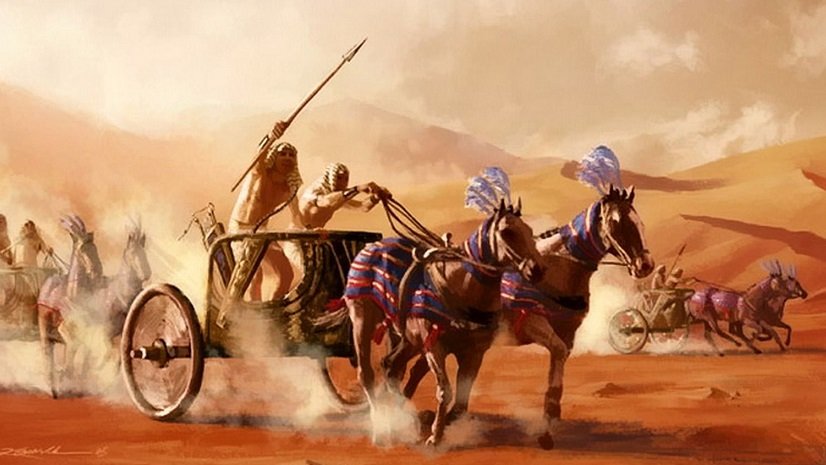
The mystery of the death of the Egyptian pharaoh Tutankhamun has remained unsolved for many centuries. Many theories have been proposed to explain his demise, and now a new hypothesis has come to light that links his death to alcohol.
Biomedical Egyptologist Sophia Aziz, speaking at the Cheltenham Science Festival to BBC Science Focus, proposed the audacious idea that Tutankhamun may have died in a chariot accident, possibly due to drink driving. Her guess is based on the fact that the pharaoh's tomb was filled with alcohol.
"People don't usually associate alcohol with this period of history," Aziz said.
She pointed to the discovery of wine in Tutankhamun's tomb, which was the first evidence of white wine in ancient Egypt. According to the scientist, the pharaoh preferred dry white wine, and this could not have ended up in his tomb by accident.
“The ancient Egyptians took with them everything they would need in the afterlife,” Aziz added. “If so, then they could take the wine with them on their journey through the underworld.”
Tutankhamun has always been portrayed as a sick king, since his mummy retained signs of several diseases. However, the question arises: could these be traces of battle wounds? Previously, worn-out armor had been discovered, leading researchers to doubt his fragile health, which some historians have said.
"This new theory implies that Tutankhamun was more of a warrior king - he actually rode a chariot," Aziz said. "He was a typical teenager who drank and probably drove his chariot too fast."
Modern statistics show that young people are more likely to drive while drunk. Although we should not impose our "norms" on ancient civilizations, this hypothesis does provide grounds for speculation that even the Egyptians of that time may have become addicted to fast driving.
However, it is worth noting that this is just a hypothesis. Some pathologies found in Tutankhamun's mummy are inconsistent with this idea, and there is no reliable evidence that his death was caused by an alcohol-related accident. In addition, some researchers point to physical disabilities that could have prevented the pharaoh from driving his chariot.
The mystery of Tutankhamun's death continues to excite the minds of researchers, and perhaps in the future we will learn the truth about his tragic death.