

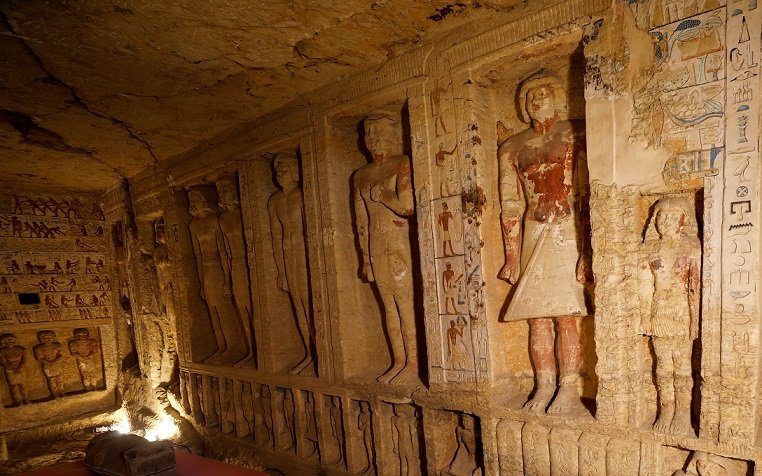
British scientists have studied the contents of several ancient Egyptian animal sarcophagi without opening them using neutron tomography. This allowed scientists to discover bones from a variety of animals, tissue fragments, and even lead inside.
In Ancient Egypt, there was a widespread tradition of mummification of animals, which were considered personifications of deities. Many animal remains are still found in ritual complexes and date back to the first millennium BC.
Researchers from the British Museum carried out neutron tomography on six sealed sarcophagi from the museum's collection, which had not previously been studied using X-rays. Thanks to this, they even received three-dimensional images of the objects contained inside. In three sarcophagi, scientists discovered animal bones, among which was the skull of a lizard from a group of reptiles that inhabit modern North Africa. The other three contained fragments of material believed to be linen, which was widely used for mummification in ancient Egypt. Experts suggest that the remains of animals were wrapped in this fabric and placed in sarcophagi.
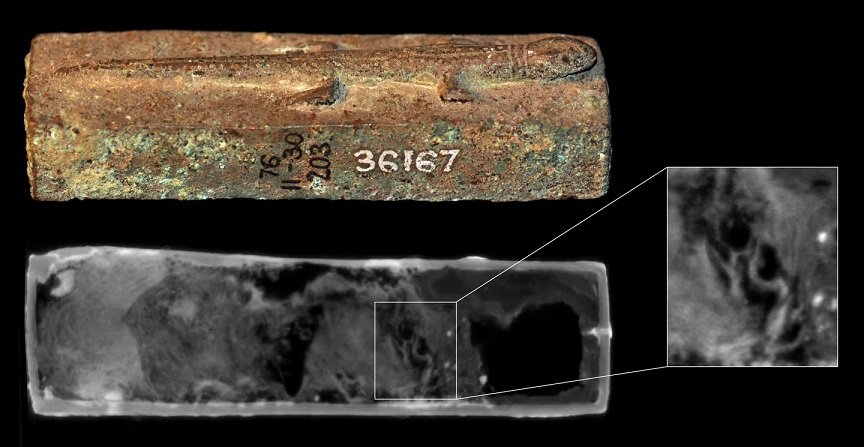
The discovery of a lizard skull among the bones inside one of the sarcophagi was unexpected for scientists and aroused great interest. The fact is that lizards and other types of reptiles in Ancient Egypt were not considered particularly revered and were rarely mummified. However, it is possible that the lizard's skull was placed in the sarcophagus as a symbol of protection from snakes and other poisonous creatures that lizards knew how to avoid.
In addition, the researchers found lead in some sarcophagi, which was likely used to distribute weight or to seal the lids. This indicates that ancient Egyptian craftsmen not only knew how to mummify animals, but also took care to preserve their remains in perfect condition.
Research into the contents of ancient Egyptian animal sarcophagi has allowed scientists to gain a deeper understanding of the mummification process and ritual practices of Ancient Egypt. Thanks to neutron tomography, which allows you to study objects without opening them, it was possible to obtain valuable data about the contents of sarcophagi that could not be obtained using X-rays. This allows scientists to continue research and expand our knowledge about the ancient culture of Egypt.