

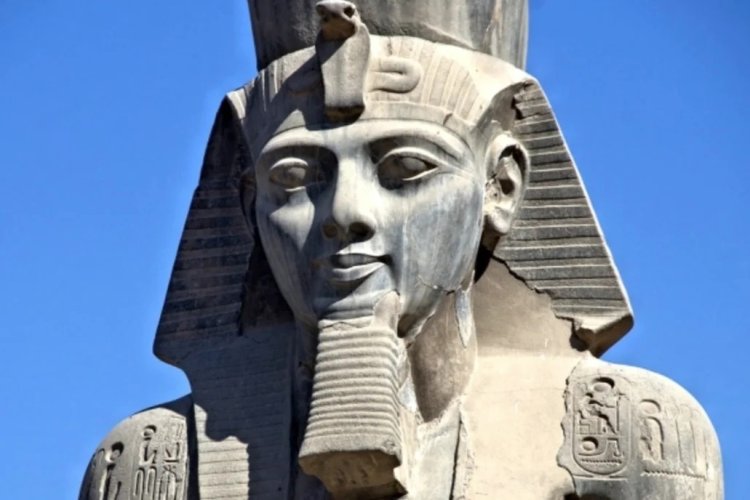
An international team of archaeologists has unearthed the top half of a long-lost statue of Egyptian pharaoh Ramesses II. This occurred almost 100 years after the lower half of the statue was identified.
In 1930, German archaeologist Günther Raeder excavated the lower part of a statue depicting Ramesses II, also known as Ramesses the Great. Ramesses ruled the Nile Valley and the wider Egyptian Empire from 1279 to 1213 BC, making him one of the longest-reigning pharaohs in history.
The newly discovered part of the statue was found by a joint team of Egyptian and American archaeologists from the Egyptian Ministry of Tourism and the University of Colorado Boulder. It was discovered during the exploration of the ruins of the ancient city of Hermopolis (modern el-Ashmunin), located approximately 240 kilometers south of Cairo.
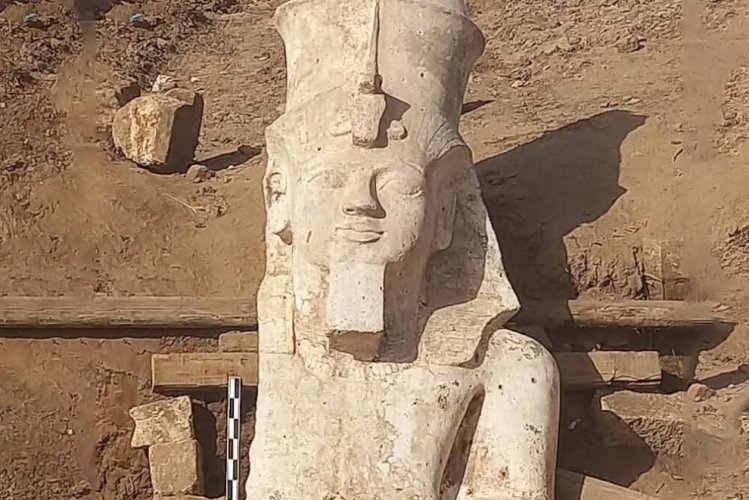
The upper part of the statue is approximately 3.8 meters long and depicts Ramesses in a seated position, wearing a double crown and a headdress depicting a king cobra. According to researchers, when assembled the entire statue would reach a height of about 7 meters.
The statue is made of limestone and has hieroglyphic inscriptions on the back praising the pharaoh.
Excavations at Hermopolis were originally started with the aim of discovering a religious center that once existed during the New Kingdom (also known as the Egyptian Empire), which flourished from the 16th to 11th centuries BC and lasted until the Roman era (30 BC). AD to 641 AD).
In addition to the found part of the statue, the researchers also discovered traces of ancient blue and yellow pigments. Analysis of these pigments can provide valuable information about the statue and when it was created.
“The scientific analysis of the pigment will be very interesting,” said assistant professor Ivona Trnka-Amrein of the University of Colorado Boulder. “Soil samples mixed with pigment can give us even more information about the history of the area.”
Trnka-Amrein's colleague Basem Gehad of Egypt's Ministry of Tourism and Antiquities suggested reuniting the top half of the statue with the bottom half. However, it is unclear where the completed statue will be placed if the proposal is approved. It will likely remain in place or be placed in a museum.